Home > INFO CENTER > NEWS>Behind the Scenes: How Precision Manufacturing Creates Reliable Kitchen Appliances
Behind the Scenes: How Precision Manufacturing Creates Reliable Kitchen Appliances
2026-01-30 14:45:12
Have you ever wondered what goes into making a dependable kitchen appliance? Fundamentally, it’s a blend of advanced manufacturing, skilled workmanship, and relentless quality control. This article gives you a brief look inside the process, showing how modern factories ensure the tools in your home are built for performance and safety.
Modern Production Lines: The Framework of Efficiency and Consistency
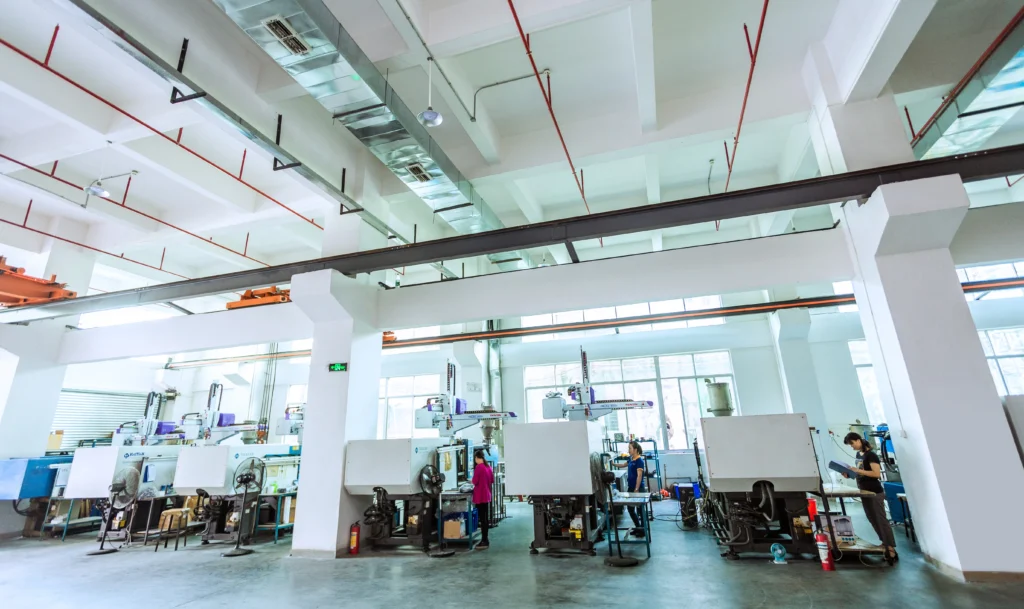
The process begins on structured production lines. Here, efficiency and consistency are key. For instance, during the assembly of a food dehydrator, different units move through dedicated stations. One station might install the heating element with calibrated torque tools, while the next secures the fan system that ensures even air circulation. This semi-automated flow allows for both high production capacity and focused human oversight on critical assembly steps.
Inside SUNSIR: advanced equipment and a professional team ensure quality small kitchen appliances.
Ensuring Excellence: A Multi-Layer Quality Control System
Of course, assembly is only part of the story. Next, every product must pass through our multi-stage quality control protocol. This system acts as a final safeguard to ensure reliability.
Component Verification: First, key parts like electronic controllers, heating elements, and safety thermostats are tested upon arrival.
In-Process Checks: Then, during assembly, technicians perform checks—for example, verifying the precise alignment of trays in a dehydrator to ensure perfect fit and airflow.
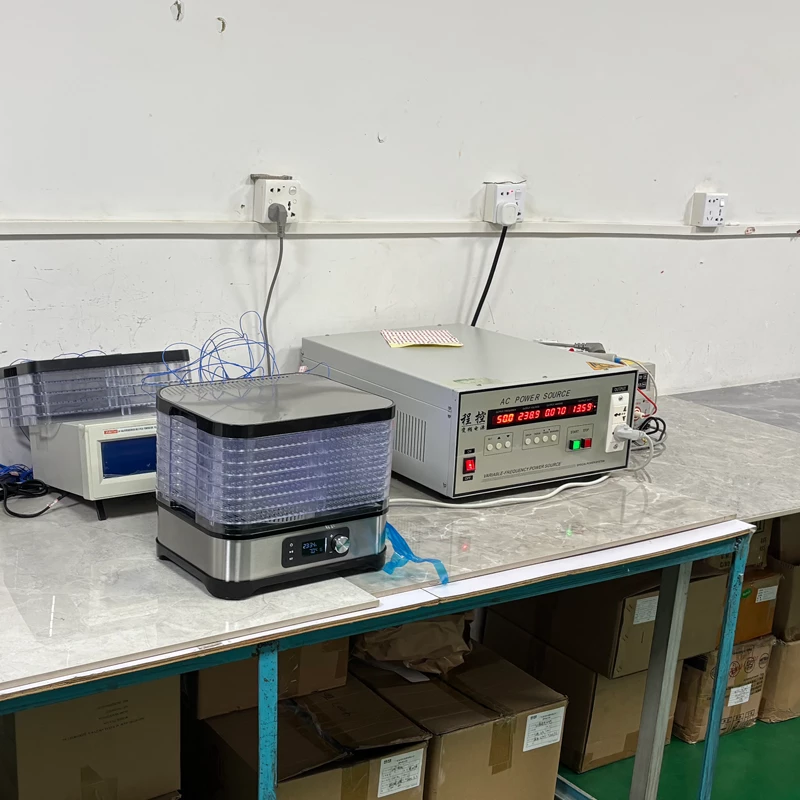
Final Performance Testing: Finally, finished units undergo rigorous power-on testing. A food dehydrator would be run through a cycle to confirm accurate temperature control, timer function, and stable operation.
A Closer Look: Testing for Real-World Performance
To illustrate, let’s consider safety and performance testing. For a food dehydrator, this isn't just about “if it turns on.” Specifically, tests include running the unit at maximum load and temperature for an extended period to monitor heat distribution and stability. Additionally, safety features like automatic overheat protection are rigorously triggered to confirm they function correctly. These detailed checks are what translate OEM manufacturer specifications into real-world reliability for the end-user.
Built on a Foundation of Process and Commitment
In conclusion, the kitchen appliances you rely on are the result of defined systems and commitment. From the production line to the final audit, a focus on process-driven manufacturing and forensic quality control ensures that every product meets its design promise. Ultimately, this